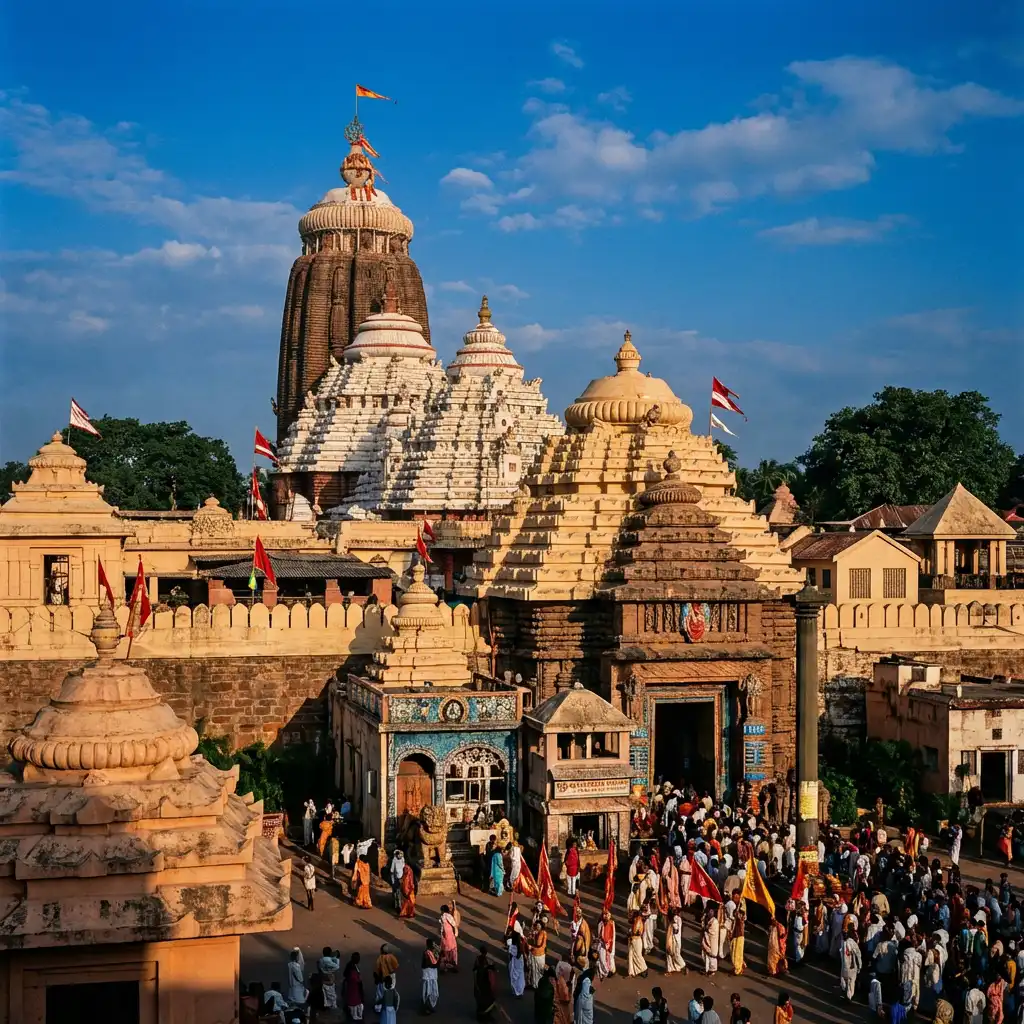
Introduction: Connecting Two Pillars of Odishan Heritage
Connecting the coastal holy city of Puri, home of Lord Jagannath, with the capital city of Bhubaneswar, home of the massive Lingaraj Temple complex, is a major pilgrimage corridor in Odisha. For tourists, pilgrims, and casual travelers, understanding the route, distance, and transit variables is key to planning a seamless trip. While Puri stands as the ultimate spiritual destination on the Bay of Bengal, the historic Old Town of Bhubaneswar plays host to some of the oldest active stone temples in India, with Lingaraj Temple being the undisputed crown jewel.
Many visitors choose to arrive in Puri, complete their Darshan at the Jagannath Temple, and then travel inland to visit the ancient shrines of Bhubaneswar. Alternatively, many fly into the Biju Patnaik International Airport (BBI) in Bhubaneswar and immediately plan a transit route to the coast. This detailed guide covers everything you need to know about the Puri to Lingaraj Temple distance, travel durations across different traffic scenarios, route highlights, historic details, and the best travel options for your personal itinerary.
Quick Distance Summary Table
Here is a fast glance at the basic details of the trip from Puri to the Lingaraj Temple in Bhubaneswar to help you plan your travel window:
| Metric | Details / Specifications |
|---|---|
| Road Distance | 56 km to 60 km (depending on exact city starting point) |
| Approx. Travel Time | 1 Hour 15 Minutes to 1 Hour 30 Minutes (by road under normal conditions) |
| Fastest Route | Puri-Bhubaneswar Highway (NH-316) |
| Route Type | Four-lane National Highway (Fully toll-paved) |
| Best Time to Travel | Early morning (5:30 AM to 8:00 AM) or late afternoon (4:00 PM to 6:00 PM) |
About Lingaraj Temple: Architecture, History, and Significance
The Lingaraj Temple is the largest and most prominent religious structure in Bhubaneswar, often referred to as the "Temple City of India." Dedicated to Lord Shiva, who is worshipped here as *Harihara* (a syncretic deity combining the elements of Shiva and Vishnu), the temple represents the culmination of medieval architectural achievements in Odisha.
The Historical Heritage
Dating back to the 11th century CE, the construction of the Lingaraj Temple is widely credited to the rulers of the Somavamsi dynasty, primarily King Jajati Keshari. Legend has it that the king shifted his capital from Jajpur to Bhubaneswar and initiated the building of this monumental structure to honor Lord Shiva. The temple received further patronization and expansion from the rulers of the Ganga dynasty, who introduced Vaishnavite influences to the temple practices, reflecting the worship of Harihara.
Religious Significance
The core deity worshipped at Lingaraj is a swayambhu (self-manifested) stone lingam, which is unique because it represents both Lord Shiva (Hara) and Lord Vishnu (Hari). This peaceful synthesis of Shaivism and Vaishnavism makes Lingaraj Temple a critical pilgrimage site for followers of both traditions. The sacred water source inside the temple compound, known as *Bindusagar Tank*, is believed to contain droplets from all the holy rivers of India and is central to the pre-darshan purification rituals.
Architectural Mastery
Built in the classic Deula style of Kalinga architecture, the Lingaraj Temple comprises four main structures aligned along a single axis:
- Vimana (Garbhagriha / Sanctum Sanctorum): The structure containing the main deity, rising to a towering height of over 180 feet.
- Jagamohana (Assembly Hall): The pillared hall where devotees gather to view the inner sanctum.
- Natamandira (Festival / Dance Hall): The structure dedicated to classical dance and religious performances.
- Bhoga-mandapa (Offering Hall): The space where offerings and bhoga are prepared and distributed.
The exterior walls of the temple are adorned with masterfully executed sculptures depicting divine figures, celestial musicians, floral motifs, and scenes from daily medieval life. The sandstone walls have withstood centuries of weather, standing as a testament to the engineering and artistic skills of ancient Odia craftsmen.
Puri to Lingaraj Temple Route Guide
Navigating from the coastal town of Puri inland to the old temple district of Bhubaneswar is straightforward, thanks to the robust highway infrastructure. The primary Puri to Lingaraj Temple route is a direct journey along the National Highway 316 (NH-316). Below is a step-by-step breakdown of the route to ensure you don't miss key turning points:
Step-by-Step Route Explanation
- Departure from Puri: Start from the Grand Road (Bada Danda) or the VIP Road area. Head north towards the bypass junction that exits the municipal limits of Puri.
- Entering NH-316: Join the main NH-316 road, which is a well-paved four-lane highway connecting the two major hubs.
- Sakhigopal (approx. 18 km from Puri): The first major town on your path. Sakhigopal is famous for its historic Satyabadi Gopinath Temple. The road here is flanked by beautiful coconut plantations and small local markets.
- Pipili (approx. 38 km from Puri): The midpoint of your journey. Pipili is world-renowned for its colorful appliqué handicrafts. Colorful banners, umbrellas, and handbags hang outside roadside stalls, making it a great brief stopover for photos.
- Uttara Junction (approx. 48 km from Puri): Once you reach the Uttara intersection, you are approaching the outskirts of Bhubaneswar. To go directly to Lingaraj Temple, continue straight towards the Samantarapur bypass rather than taking the diversion towards Cuttack.
- Samantarapur Junction & Old Town entry: From Samantarapur, take the left lane entering the historic Old Town area of Bhubaneswar. Follow the signage towards Bindusagar Road, which leads directly to the temple parking area.
Road Conditions and Highway Details
The road conditions on NH-316 are excellent. The highway features smooth tarmac, proper lane markings, reflecting studs, and overhead direction signs. It is a toll road with toll plazas that support FASTag transactions. The route is highly recommended for travel by car or taxi due to the comfortable and predictable road layout.
Travel Options Comparison
Travelers have multiple modes of transit available to cover the distance from Puri to Lingaraj Temple. The following comparison table highlights the advantages and disadvantages of each option to help you make an informed decision:
| Mode of Travel | Estimated Time | Advantages | Disadvantages |
|---|---|---|---|
| Taxi / Private Car | 1h 15m - 1h 30m | Door-to-door drop, air-conditioned comfort, luggage storage, customized stops. | Higher cost compared to public transportation. |
| Train | 2h 00m - 2h 30m (inc. transfers) | Highly economical, avoids road traffic. | Requires fixed scheduling, train station is 5 km from Lingaraj Temple, necessitating a second transfer by auto. |
| Public Bus | 1h 45m - 2h 15m | Budget-friendly, high frequency of buses running between Puri and Bhubaneswar. | Can be crowded, drops off at main bus stands (Baramunda or Kalpana) which are away from the temple. |
| Self-Drive | 1h 20m - 1h 45m | Complete control over speed, flexibility to deviate to nearby tourist spots. | Navigating city traffic in Bhubaneswar and parking near the temple can be stressful. |
Travel Time Breakdown under Different Scenarios
The Puri to Lingaraj Temple travel time of 1 hour 15 minutes is a baseline for normal driving conditions. In reality, travel times vary based on the season, day of the week, and local festivals. Here is a realistic breakdown of what to expect:
- Normal Weekday Traffic: On standard weekdays, the road remains free-flowing. You can expect to reach the temple parking from Puri in about 1 hour and 15 minutes by road.
- Weekend Traffic (Saturday - Sunday): Weekend leisure travelers between Bhubaneswar and Puri can increase vehicle numbers on NH-316. Expect minor congestion at toll plazas and near city entry points, increasing travel time to about 1 hour and 30 minutes.
- Festival Season Traffic (Maha Shivratri): During Maha Shivratri, tens of thousands of devotees head to Lingaraj Temple. Roads in Bhubaneswar's Old Town are barricaded, and traffic is diverted. Travel time can increase to 2 hours or more, with mandatory walking distances to reach the temple gates.
- Rath Yatra Impact: The world-famous Puri Rath Yatra causes massive traffic changes. The roads exiting Puri are heavily regulated and clogged with pilgrim buses. During this annual festival period, travelling from Puri to Bhubaneswar by road can easily take over 3 to 4 hours due to strict security checks, lane blockages, and traffic diversions.
Best Time to Visit Lingaraj Temple
Planning when to visit Lingaraj Temple involves assessing the seasonal weather of coastal Odisha and aligning your trip with religious events:
Seasonal Weather Overview
- Winter (October to February) - Recommended: The weather is cool and pleasant, with daytime temperatures ranging from 15°C to 28°C. This is the absolute best time for tourists to explore the temple architecture without dealing with extreme humidity.
- Monsoon (June to September): The region receives heavy rainfall. While the temples look clean and beautiful in the rain, walking around open stone complexes can be challenging.
- Summer (March to May): Summers in Odisha are extremely hot and humid, with temperatures easily exceeding 40°C. Walking barefoot on the stone floors of the temple during the afternoon is almost impossible.
Key Festival Periods
The most grand festival celebrated at Lingaraj Temple is Maha Shivratri (typically in February or March). The temple is decorated with thousands of lights, and devotees stay awake all night waiting for the *Mahadipa* (a massive lamp lit at the top of the temple spire). Another key event is the Rukuna Rath Yatra, the annual chariot festival of Lord Lingaraj, which takes place in April and features unique local rituals.
Places to Visit Near Lingaraj Temple
If you are travelling the distance from Puri to Lingaraj Temple, you should maximize your journey by visiting other historically significant sites located within a 10-kilometer radius of the temple:
1. Mukteshwar Temple
Often called the "Gem of Odishan Architecture," Mukteshwar Temple is located just 1.5 km from Lingaraj. Built in the 10th century, it is famous for its stunning stone arched gateway (*Torana*) carved with delicate figures of monkeys, peacocks, and celestial maidens. The compact design and exquisite carvings make it a must-visit for art lovers.
2. Rajarani Temple
Set amidst lush manicured gardens, the 11th-century Rajarani Temple is unique because it has no presiding deity inside. It is famous for its reddish-gold sandstone construction and the elegant sculptures of guardians (*Dikpalas*) protecting the eight directions.
3. Dhauli Shanti Stupa
Situated on the banks of the Daya River (approx. 7 km from Lingaraj Temple), Dhauli is the historic site where Emperor Ashoka renounced violence and embraced Buddhism after the bloody Kalinga War. The white Peace Pagoda stands atop the hill, offering panoramic views of the surrounding countryside and ancient rock edicts.
4. Khandagiri and Udayagiri Caves
Located about 9 km from Lingaraj Temple, these twin hills feature rock-cut caves carved out in the 2nd century BCE for Jain monks. The Hathi Gumpha (Elephant Cave) inscription here provides invaluable historical details about the ancient King Kharavela.
5. Ekamra Kanan Botanic Gardens
The largest botanical garden in Bhubaneswar, featuring a massive lake, rose gardens, cacti houses, and extensive walking paths. It is a peaceful green oasis perfect for relaxing after a long day of temple sightseeing.
Frequently Asked Questions
What is the exact road distance from Puri to Lingaraj Temple?
How far is Lingaraj Temple from Puri by rail?
What is the travel time by car under normal conditions?
What is the road condition between Puri and Bhubaneswar?
Are non-Hindus allowed inside the Lingaraj Temple?
What are the opening and closing timings of the temple?
Are mobile phones and cameras allowed inside the temple?
Is there a vehicle parking facility available near Lingaraj Temple?
How can I travel from Puri to Lingaraj Temple on a budget?
What other historic temples can I visit nearby?
Plan Your Tour: Helpful Links
- Read our detailed guide: Bedi Hanuman Temple Puri Timings, Legend & Guide.
- Read our detailed guide: Gundicha Temple Timings, History & Visitor Guide.
- Read our detailed guide: Loknath Temple Puri Timings, History & Visitor Guide.
- Read our detailed guide: Narendra Tank Puri Timings, History & Guide.
- Read our detailed guide: Tota Gopinath Temple Timings, Location & Legend.
- Read our detailed guide: Puri to Alarnath Temple Distance, Route & Travel Guide.
- Read our detailed guide: Sakhigopal to Alarnath Temple Distance & Tour Route.
- Read our detailed guide: Puri to Sakhigopal Temple Distance.
- Read our detailed guide: Puri to Ramachandi Temple Distance & Beach Travel Guide.
- Read our detailed guide: Puri to Sarala Temple Jhankoti Distance & Travel Guide.
- Read our detailed guide: Puri to Kakatpur Mangala Temple Distance & Travel Guide.
- Read our detailed guide: Puri to Nilamadhav Temple Kantilo Distance & Travel Guide.
- Read our detailed guide: Puri to Tara Tarini Temple Distance & Travel Guide.
- Read our detailed guide: Puri to Ghatagaon Tarini Temple Distance & Travel Guide.
- Read our detailed guide: Jajpur to Biraja Temple Distance & Travel Guide.
- Read our detailed guide: Bhadrak to Akhandalamani Temple Distance & Guide.
- Read our detailed guide: Cuttack to Dhabaleswar Temple Distance & Travel Guide.
- Check sightseeing packages: Puri Taxi Packages.