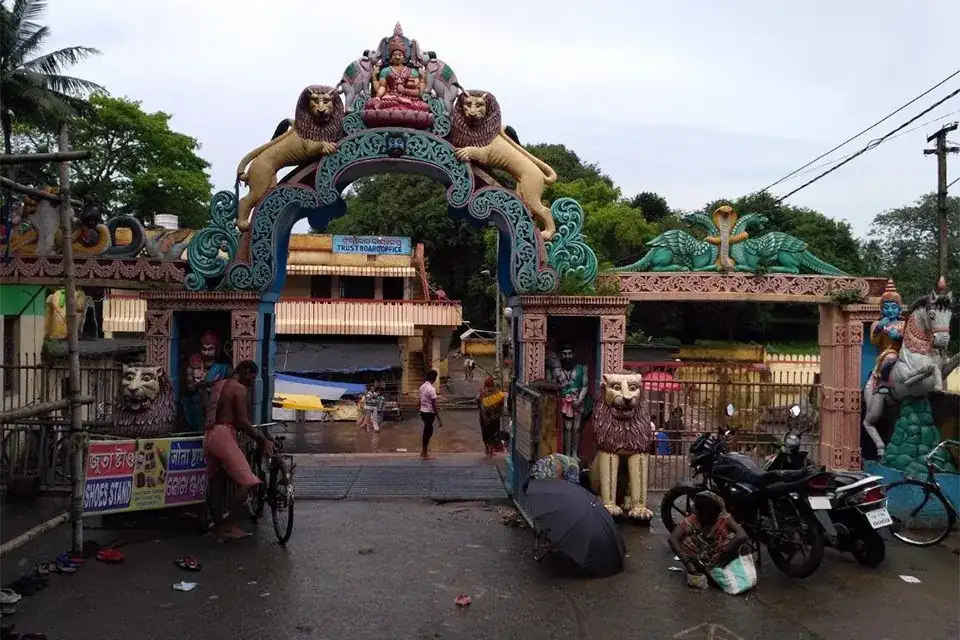
Lokanath Temple is Puri's most important Lord Shiva shrine, about 2 km west of the Jagannath Temple on Lokanath Road. Its Shiva lingam stays submerged in a natural spring pool all year — devotees see the water, not the lingam — and it is revealed only once a year on Pankoddhar Ekadasi. Maha Shivaratri, with the midnight Harihara Mahadipa, is the temple's biggest night.
About Lokanath Temple Puri
Lokanath Temple (often written Loknath Temple) is the principal Shaivite shrine of Puri, standing in a quiet grove on Lokanath Road in the western part of the holy town. While Puri is world-famous as the seat of Lord Jagannath, tradition treats Lokanath as the town's guardian Shiva — and no Puri pilgrimage is considered complete for many Odia families without bowing here after Jagannath darshan.
The temple's fame rests on something you cannot actually see: the Shiva lingam sits below the level of a natural spring, permanently covered by water. Devotees offer prayers to the pool itself, and the sight of bel leaves and flowers floating over the hidden lingam is the temple's defining image.
The submerged Shiva lingam
A perennial underground spring keeps the sanctum's lingam bathed round the year — the water is believed to be sacred Ganga jala performing an unending abhisheka. Only once a year, on Pankoddhar Ekadasi (a few days before Maha Shivaratri), is the pool drained and the lingam revealed for darshan. That single day draws some of the temple's largest queues, as devotees get their only direct sight of Lokanath.
Legend of Lokanath
Local tradition holds that the lingam was installed by Lord Rama himself on his way to Lanka, making the shrine ancient beyond record. Another cherished belief names Lokanath the protector — the deity who guards Puri and the treasures of the Jagannath temple. The bond between the two shrines is lived out ritually: during major Shaiva observances, offerings and honours travel between the Jagannath temple and Lokanath, expressing the Hari-Hara (Vishnu-Shiva) unity that Puri embodies.
Maha Shivaratri and the Harihara Mahadipa
Maha Shivaratri is Lokanath's greatest festival. Through the night, thousands keep vigil in the temple courtyard waiting for the Harihara Mahadipa — the great lamp raised over the temple around midnight, the moment the fast is broken. The lanes around the temple fill from evening onwards, police manage one-way movement, and the atmosphere is one of Puri's most intense religious experiences outside Rath Yatra. Shravana Mondays and the month of Kartika also see heavy darshan crowds.
Lokanath Temple timings and entry
- Timings: roughly 5:00 AM to 9:00 PM daily; hours extend on Shivaratri night and festival days.
- Entry: darshan is free. Puja and abhisheka arrangements are made at the temple counters.
- Photography: restricted inside the sanctum area — follow the signs and the sevayats' instructions.
Best time to visit
Early mornings are calm and unhurried for regular darshan. For the spectacle, come on Maha Shivaratri (with patience for crowds), on Pankoddhar Ekadasi to see the lingam itself, or on Shravana Mondays when the shrine hums with kanwariya-style devotion. October to February offers the most comfortable weather for combining Lokanath with Puri's other sights.
How to reach Lokanath Temple
The temple is inside Puri town — about 2 km from the Jagannath Temple, 3 km from Puri railway station and 2 km from the Swargadwar beach area. Autos and cycle-rickshaws reach it easily; a private cab makes sense when you are combining it with a fuller Puri circuit or arriving with elders on festival days, when the walk from the barricades can be long.
Suggested Puri circuit with Lokanath
A comfortable half-day loop: Jagannath Temple darshan at dawn → Lokanath Temple → Narendra Pokhari → Gundicha Temple → Bedi Hanuman → Swargadwar and the beach by late morning. Read our Lokanath timings and history guide for deeper background, or the Shivaratri darshan guide if you are planning for the big night.