Best full-day route: Lingaraj Temple → Mukteswar Temple → Rajarani Temple → Udayagiri & Khandagiri Caves → Odisha State Museum / Tribal Museum → Dhauli Shanti Stupa → Ekamra Haat Best start time: 8:00 AM or earlier in summer Total duration: 8–10 hours Best season: October to March Best for first-time visitors: Heritage + temple route Best for families with children: Nandankanan Zoo route What to skip if starting late: Nandankanan and museums
Best Full-Day Route for First-Time Visitors
Bhubaneswar offers a magnificent mix of ancient temples, historical caves, insightful museums, and peaceful pagodas. For first-time visitors, the best strategy is to group the attractions geographically. Begin in the early morning in the Old Town area, where the majority of the ancient temples are located. As the day progresses and temperatures rise, move to indoor spots like the museums. Finally, end your day witnessing a beautiful sunset at Dhauli. By following this route, you ensure you cover the absolute best places to visit in Bhubaneswar in one day without exhausting yourself with unnecessary travel back and forth.
Bhubaneswar 1 Day Itinerary: Hour-by-Hour Plan
| Time | Place / Activity | Suggested Duration | Why Visit | Notes |
|---|---|---|---|---|
| 8:00 AM | Lingaraj Temple & Bindu Sagar | 1.5 hours | Most prominent temple in the city. | Non-Hindus use viewing platform. |
| 9:45 AM | Mukteswar & Parasurameswar Temples | 1 hour | Exceptional 10th-century Kalinga architecture. | Both are very close to each other. |
| 11:00 AM | Rajarani Temple | 45 mins | Beautiful carvings set in manicured gardens. | Ticket required. Great for photos. |
| 12:15 PM | Udayagiri & Khandagiri Caves | 1.5 hours | Ancient Jain rock-cut shelters and carvings. | Involves walking up stairs. |
| 1:45 PM | Lunch Break | 1 hour | Rest and refuel. | Find a local restaurant nearby. |
| 3:00 PM | Odisha State Museum OR Tribal Museum | 1.5 hours | Deep dive into Odisha's culture and history. | Check opening days (usually closed on Mondays). |
| 5:00 PM | Dhauli Shanti Stupa | 1 hour | Historic Kalinga War site and Peace Pagoda. | Best during sunset. |
| 6:30 PM | Ekamra Haat | 1 hour | Local crafts, handlooms, and traditional snacks. | Relaxing evening activity. |
Route Option A: Heritage and Temple Itinerary
The Classic Route
Lingaraj Temple → Bindu Sagar → Mukteswar Temple → Parasurameswar Temple → Rajarani Temple → Udayagiri & Khandagiri Caves → Odisha State Museum or Tribal Museum → Dhauli Shanti Stupa → Ekamra Haat
Best for: First-time visitors, temple lovers, history lovers and architecture lovers. This route maximizes your exposure to Bhubaneswar's ancient past, covering the most iconic and historically significant landmarks in the city. You get a perfect mix of Hindu temple architecture, Jain history, and Buddhist monuments in a single day.
Route Option B: Family Itinerary with Nandankanan Zoo
The Nature & Kids Route
Lingaraj / Mukteswar → Nandankanan Zoo → Udayagiri & Khandagiri or Dhauli → evening snacks/market
Best for: Families travelling with children or nature enthusiasts. Nandankanan Zoological Park requires at least 3–4 hours to explore comfortably. Because it takes up a large portion of the day, do not try to combine it with every temple and museum unless the traveller has extra time. This route balances cultural sites with engaging wildlife experiences.
Route Option C: Half-Day Bhubaneswar Itinerary
The Quick Highlights
Lingaraj Temple → Mukteswar Temple → Rajarani Temple → Udayagiri & Khandagiri Caves
Best for: Visitors starting after lunch, those on a tight schedule, or if the visitor has only 4–5 hours before a flight or train. This extremely focused route skips the museums, zoo, and distant outskirts to ensure you see the most celebrated architectural highlights without feeling rushed.
Route Option D: Airport or Railway Station Arrival Itinerary
The Arrival Route
Bhubaneswar Airport or Railway Station → Old Town temples → Udayagiri & Khandagiri → Dhauli → hotel drop
Best for: Visitors landing in Bhubaneswar in the morning and wanting a same-day city plan. By hiring a local sightseeing cab straight from the airport, you can store your luggage in the vehicle and immediately begin touring the Old Town, which is relatively close to the airport, saving transit time to a hotel.
Places Covered in This Bhubaneswar Itinerary
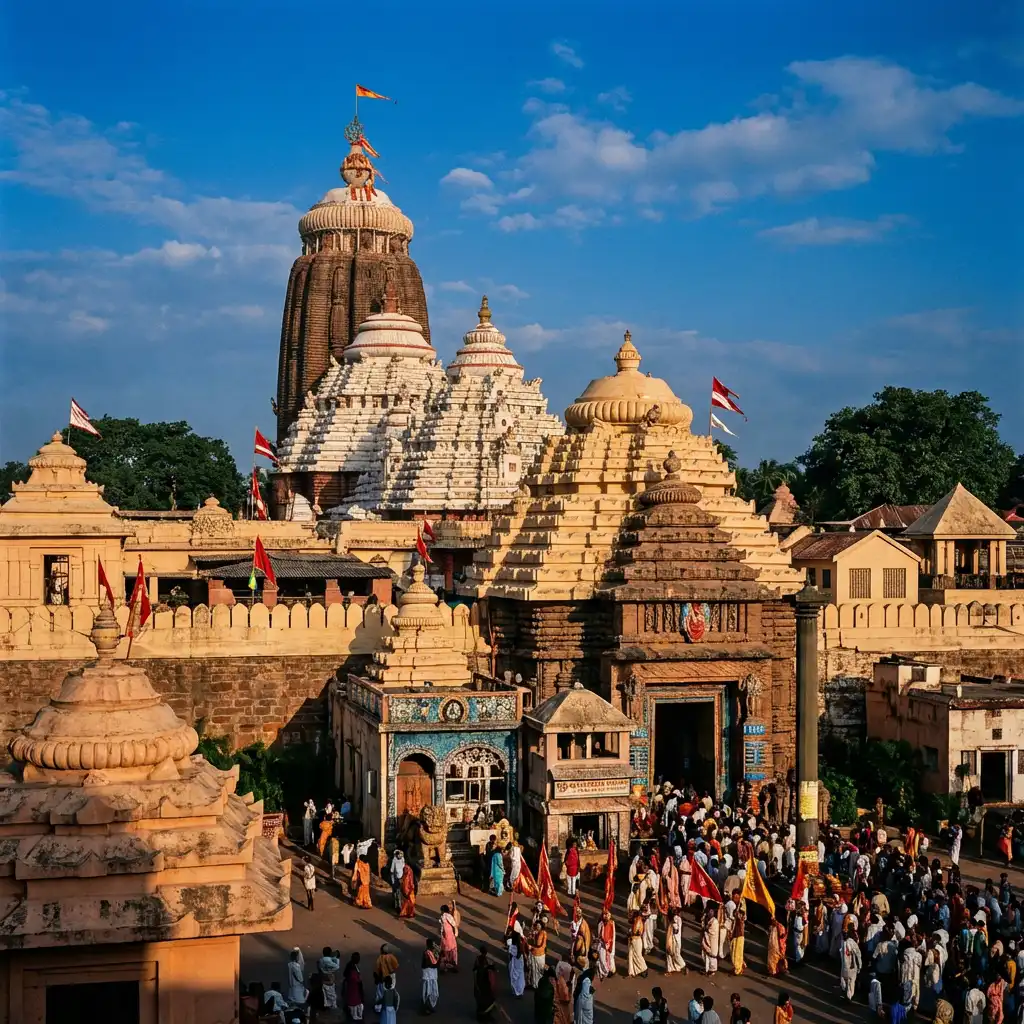
Lingaraj Temple
Why it matters: Dedicated to Harihara (a form of Shiva and Vishnu), it is the largest and most significant temple in Bhubaneswar, showcasing the pinnacle of Kalinga architecture with its towering 180-foot main spire.
Best time to visit: Early morning (around 7:00 AM - 8:00 AM) to experience the morning rituals and avoid heavy crowds.
Approximate time needed: 1 to 1.5 hours.
Practical note: Non-Hindus are generally not permitted inside the inner complex. However, there is an official viewing platform just outside the boundary wall that offers an excellent panoramic view of the temple structures. Cameras and mobile phones are strictly prohibited inside.
Bindu Sagar
Why it matters: This vast, sacred lake is located just north of the Lingaraj Temple. It is believed to contain drops of water from every sacred river and pool in India, making it an important spiritual site.
Best time to visit: Early morning or late evening when the atmosphere is serene.
Approximate time needed: 20 to 30 minutes.
Practical note: You can take a peaceful walk along the banks and observe local life. It is an excellent spot for quiet reflection and photography, often paired seamlessly with a visit to Lingaraj Temple.
Mukteswar Temple
Why it matters: Often referred to as the "Gem of Odisha architecture," this 10th-century temple is famous for its magnificent, exquisitely carved stone archway (Torana). It represents a crucial transitional phase in regional architecture.
Best time to visit: Mid-morning, when the sunlight highlights the detailed carvings.
Approximate time needed: 45 minutes.
Practical note: The temple is relatively small but incredibly detailed. It is surrounded by a well-maintained garden, making it a very pleasant and photogenic stop. No entry fee is usually required.
Parasurameswar Temple
Why it matters: Built around 650 CE, it is one of the oldest surviving Hindu temples in Bhubaneswar. It is renowned for its intricate bas-reliefs of Lord Shiva and scenes from mythology, offering a glimpse into early Odishan art.
Best time to visit: Can be visited right after Mukteswar Temple as they are located very close to each other.
Approximate time needed: 30 minutes.
Practical note: History buffs will appreciate the ancient inscriptions and early architectural style. It is a quick but highly rewarding stop for those interested in historical timelines.
Rajarani Temple
Why it matters: Known locally as the "Love Temple" due to its sensual carvings, this 11th-century structure lacks a presiding deity. It is celebrated entirely for its phenomenal sculptural beauty and the unique red and gold sandstone used in its construction.
Best time to visit: Late morning.
Approximate time needed: 45 minutes.
Practical note: The temple is set in sprawling, beautifully kept grounds managed by the ASI. There is a nominal entry ticket. Because it is not an active place of worship, it is generally very relaxed for photography and walking.
Udayagiri and Khandagiri Caves
Why it matters: These partly natural, partly artificial caves were carved out as residential blocks for Jain monks during the reign of King Kharavela in the 1st century BCE. They feature fascinating rock-cut architecture and historical inscriptions.
Best time to visit: Before noon to avoid the harsh afternoon heat, as there is little shade.
Approximate time needed: 1.5 to 2 hours.
Practical note: Exploring the caves requires climbing steep and uneven stone stairs. Comfortable walking shoes are a must. Beware of the monkeys in the area; avoid carrying loose food items. An entry ticket is required for Udayagiri.
Odisha State Museum
Why it matters: A treasure trove of Odisha's vast heritage, the museum houses extensive collections of ancient sculptures, rare palm-leaf manuscripts, traditional arms, and archaeological artifacts. It provides vital context for the temples you visit.
Best time to visit: Early afternoon, providing a perfect escape from the midday sun.
Approximate time needed: 1.5 to 2 hours.
Practical note: Like many government museums, it is usually closed on Mondays and national holidays. Check local timings before planning your route. It is vast, so focus on the galleries that interest you most.
Tribal Museum (Museum of Tribal Arts and Artifacts)
Why it matters: Odisha is home to over 60 distinct indigenous tribal communities. This excellent, well-curated museum showcases their traditional dwellings, tools, textiles, and art, offering a fascinating look at the state's diverse anthropology.
Best time to visit: Afternoon.
Approximate time needed: 1 to 1.5 hours.
Practical note: It is usually closed on Mondays and state holidays. If you have to choose between the State Museum and the Tribal Museum, pick the Tribal Museum if you want a culturally unique experience specific to Odisha's indigenous people.
Dhauli Shanti Stupa
Why it matters: Located on the banks of the Daya River, this hill is historically significant as the site of the brutal Kalinga War, which led Emperor Ashoka to embrace Buddhism and non-violence. The modern white Peace Pagoda (Shanti Stupa) stands as a monument to peace.
Best time to visit: Late afternoon to evening.
Approximate time needed: 1 hour.
Practical note: The sunset views from the hill are spectacular. There is also a light and sound show in the evenings that narrates the history of Ashoka and the Kalinga War, though timings should be confirmed locally.
Ekamra Haat
Why it matters: Situated in the heart of the city, this traditional crafts village is designed to look like a rural market. It brings together artisans from across Odisha to sell handlooms, Pipli applique work, and Pattachitra paintings.
Best time to visit: Evening (after 6:00 PM).
Approximate time needed: 1 hour.
Practical note: It is the perfect place to end your day, shop for authentic souvenirs, and try local Odia snacks at the various food stalls in a safe, relaxed environment.
Nandankanan Zoo (Optional Family Route)
Why it matters: A premier biological park famous for its successful captive breeding of white tigers and gharials. It includes extensive enclosures, a botanical garden, and a beautiful lake.
Best time to visit: Morning, when animals are most active before the midday heat.
Approximate time needed: 3 to 4 hours.
Practical note: Nandankanan is massive and requires extensive walking (though battery-operated vehicles are available). It is closed on Mondays. Due to the time needed, it must replace other major stops in a 1-day itinerary.
Overview of Places and Time Required
| Place | Recommended Time Needed | Best For | Skip If |
|---|---|---|---|
| Lingaraj Temple | 1 - 1.5 hours | Architecture, spirituality | Only if strictly short on time (must-visit) |
| Udayagiri Caves | 1.5 - 2 hours | History, photography, views | Difficulty climbing stairs |
| Dhauli Stupa | 1 hour | Sunsets, Buddhist history | Rushing back to airport/station early |
| Nandankanan Zoo | 3 - 4 hours | Families, children, nature | You want a pure heritage/temple tour |
| State Museum | 1.5 hours | Culture buffs, avoiding heat | Doing a half-day itinerary |
Comparing Your Itinerary Options
| Route Option | Places Covered | Best For | Total Time |
|---|---|---|---|
| A: Classic Heritage | Old Town Temples + Caves + Museum + Dhauli | First-timers, history buffs | 8–10 hours |
| B: Family Route | 1-2 Temples + Nandankanan Zoo + Dhauli or Caves | Families with kids | 8 hours |
| C: Half-Day | Old Town Temples + Caves ONLY | Tight schedules | 4–5 hours |
| D: Arrival Route | Airport → Temples → Caves → Dhauli → Hotel | Morning arrivals | 7–8 hours |
What to Skip If You Have Less Time
- Skip Nandankanan Zoo entirely if you are prioritizing historical and cultural landmarks.
- Skip the State Museum and Tribal Museum if you only have a half-day; focus instead on the open-air ancient architecture of the Old Town.
- If you are arriving late in the morning, consider skipping the smaller temples (like Parasurameswar) to ensure you have enough time for the major highlights like Lingaraj and the Caves before they close.
Best Time to Start Bhubaneswar Sightseeing
- Start Early: Aim to begin your day by 8:00 AM or 8:30 AM. Temples are less crowded, and the weather is much more pleasant for walking.
- Beat the Heat: In summer (April to June), it is critical to finish outdoor activities like temple visits and cave explorations before noon. Use the hot afternoon hours for indoor museum visits.
- Best Season: October to March is universally considered the most comfortable season for a full day of sightseeing in Bhubaneswar, offering cool, dry days.
Local Tips for Families, Senior Citizens and First-Time Visitors
- Visit Old Town temples together because they are geographically close to each other, minimizing travel time.
- Do Udayagiri and Khandagiri before peak afternoon heat because considerable walking and stair climbing is required.
- Dhauli is much better in the late afternoon or early evening to enjoy the sunset breeze.
- Non-Hindus may not be allowed inside active temples like Lingaraj; utilize the designated outer viewing platforms respectfully.
- Temple photography, footwear, mobile phone, and leather-item rules vary drastically from site to site. Visitors should check locally at the entrance of each monument.
- During major festivals (like Maha Shivaratri), public holidays, and weekends, expect heavier traffic and crowds; add buffer time to your schedule.
How to Travel Between These Places
Bhubaneswar's attractions are spread across different zones: Old Town, Khandagiri, the museum district, and the outskirts like Dhauli and Nandankanan. While auto-rickshaws are available for short hops, negotiating fares at every stop wastes valuable time. Public buses are available but limit flexibility for a packed 1-day itinerary. Hiring a dedicated vehicle for the entire day is the most efficient and practical choice for tourists.
Need a cab for this route? You can book a Bhubaneswar local sightseeing cab after finalizing your itinerary.
View Local Cab Options