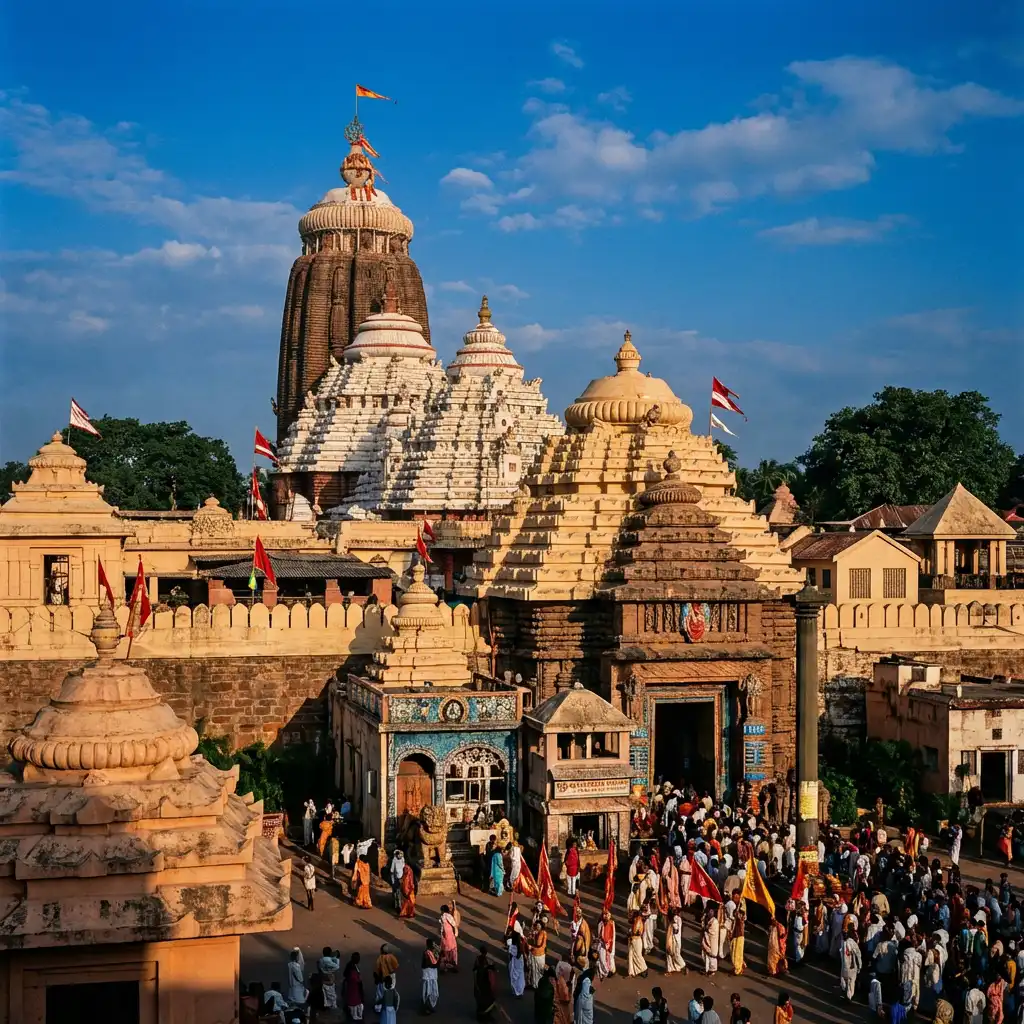
Planning your visit to the Shree Jagannath Temple in Puri, Odisha? The "best time" depends on what you seek—comfortable weather, spiritual festivals, or peaceful darshan. With the new 2026 Dhadi Darshan queue system and strict mobile phone bans now in effect, understanding the timing and rules is more crucial than ever.
This comprehensive guide covers everything: the ideal months to visit (October to February for weather, June-July for Rath Yatra), daily ritual timings from Mangala Aarti to Pahuda, the new queue system at Singhadwara, and insider tips to avoid crowds and scams. Whether you're a first-time pilgrim or a returning devotee, this is your definitive resource for planning a meaningful visit to Lord Jagannath's sacred abode.
⚠️ Critical 2026 Updates for Visitors
Read this before your visit to avoid inconvenience
Mobile Phones Strictly Banned: Electronic devices including mobiles, cameras, smartwatches, and leather items are completely prohibited inside the temple. Deposit counters are available near Singhadwara entrance. Violations result in fines.
Beware of Fake VIP Darshan Tickets: General darshan is FREE. Websites like "India Thrills" selling online VIP tickets are SCAMS. The SJTA (temple administration) has filed cases against them. Only use official counters inside the temple complex.
New Dhadi Darshan Queue System: Since January 2025, all entry is through Singhadwara (Lion's Gate) via designated barricaded queues with AC tunnels. Exit through North or South gates only. Plan for queue time during peak hours.
The Golden Hours
5:30 AM
Experience the holy Mangala Aarti with minimal crowds and the serene morning breeze.
6:00 PM
Witness the majestic Sandhya Aarti amidst the divine evening lights and chants.
When is the Best Time to Visit Puri Jagannath Temple? (Seasonal Analysis)
The "best time" to visit depends on your priorities: weather comfort, festival participation, or crowd avoidance. Here's a month-by-month breakdown to help you decide.
Winter (October to February): Peak Pilgrimage Season
This is the most recommended period for visiting Puri Jagannath Temple. The weather is pleasant with temperatures ranging from 15°C to 28°C, low humidity, and comfortable conditions for exploring the temple complex and nearby attractions like Konark Sun Temple and Chilika Lake.
Pros: Comfortable weather, ideal for sightseeing, perfect for elderly
visitors and families.
Cons: Peak tourist season means higher crowds, especially in December and
January. Hotel prices are at their highest. Major festivals like Kartik Purnima (November)
attract massive crowds.
Insider Tip: Visit in late February or early October for the "shoulder season" advantage—good weather with fewer crowds.
Summer (March to June): For Budget Travelers & Peaceful Darshan
Summer in Puri is hot and humid, with temperatures reaching 35°C-40°C. However, this is when you'll find the lowest crowds and best hotel deals.
Pros: Minimal crowds, budget-friendly accommodation, peaceful temple
atmosphere, shorter queue times.
Cons: Intense heat and humidity, uncomfortable for outdoor activities, not
ideal for elderly or children.
Best for: Solo spiritual seekers, budget travelers, those who prioritize peaceful darshan over comfort. The new AC tunnels in the Dhadi Darshan queue system help mitigate the heat.
Monsoon (July to September): The Rath Yatra Season
The monsoon brings the world-famous Rath Yatra (Chariot Festival), typically in June-July. This is the most spiritually significant time but also the most crowded.
Rath Yatra 2026 Date: July 16, 2026 (mark your calendar!)
Pros: Witness the spectacular Rath Yatra, experience Puri at its most
vibrant, participate in Snana Purnima and Chandan Yatra festivals.
Cons: Extreme crowds (1 million+ visitors), hotel prices skyrocket (3-5x
normal), heavy rainfall, main temple deities are in Gundicha Temple during the festival
period.
Important Note: During "Anasara" (15 days after Snana Purnima in late June), the main deities are not visible to the public. Avoid this period if you want to see Lord Jagannath, Balabhadra, and Subhadra on the Ratna Simhasana.
Jagannath Temple Festival Calendar (2026-2027)
Planning around festivals can enhance your spiritual experience. Here are the major festivals at Puri Jagannath Temple:
| Festival Name | Approx. Month | Significance |
|---|---|---|
| Rath Yatra | June/July | Chariot Festival - Deities leave temple |
| Snana Purnima | June | Bathing Festival (Anasara follows) |
| Chandan Yatra | May | 42-day Sandalwood Festival |
| Kartik Purnima | November | Holy Month rituals |
| Dola Purnima | March | Holi celebrations |
Puri Jagannath Temple Opening Time & Daily Darshan Timings
Understanding the daily ritual schedule (Niti) is crucial for planning your visit. The temple opens at 5:00 AM and closes around midnight, but there are specific closure periods during food offerings (Bhoga).
Complete Daily Ritual Schedule
| Time | Ritual Name | Crowd Level |
|---|---|---|
| 5:00 AM | Dwarpitha & Mangala Aarti | Low |
| 6:00 AM | Mailam & Abakash | Low |
| 7:00 AM - 8:00 AM | Sahanamela (Public Darshan) | Moderate |
| 8:00 AM - 9:00 AM | Sakala Dhupa | Moderate |
| 1:00 PM - 3:00 PM | Madhyanha Pahuda (Temple Closed) | No Entry |
| 3:30 PM - 5:00 PM | Temple Reopens | Moderate |
| 6:30 PM - 7:00 PM | Sandhya Aarti | High |
| 9:00 PM - 10:30 PM | Late Evening Darshan | Low |
| 12:00 AM | Pahuda (Temple Closes) | Closed |
For Spiritual Experience: Visit at 5:00 AM for Mangala Aarti. The temple is quietest, and the morning energy is divine.
For Hassle-Free Darshan: Visit after 9:00 PM. Most tourists leave by evening, and you'll get a peaceful darshan with minimal queue time.
Avoid: 11:00 AM - 3:00 PM (temple closed for Pahuda) and 6:00 PM - 8:00 PM (peak evening crowd).
Understanding the 2026 Dhadi Darshan Queue System
The Shree Jagannath Temple Administration (SJTA) implemented the Dhadi Darshan system in January 2025 to manage crowds more efficiently and improve the visitor experience.
How the New Queue System Works
- Entry Point: All visitors must enter through Singhadwara (Lion's Gate) on the East side. This is the main entrance with the iconic Aruna Stambha pillar.
- Queue Path: Designated barricaded queues start from Market Square. The administration has installed AC tunnels and shaded areas along the queue path to protect devotees from heat and rain.
- Exit Strategy: After darshan, exit through the North Gate (Hastidwara) or South Gate. Do not attempt to exit through Singhadwara to avoid congestion.
- Senior Citizen Facilities: Free battery-operated vehicles are available from Market Square to the temple gates for elderly and disabled visitors. Dedicated queues for senior citizens help avoid the main crowd.
- Wheelchair Access: Ramps are being installed in the outer complex. While direct wheelchair access to the Ratna Simhasana (throne) remains challenging due to steps (Baisi Pahacha), assistance is available.
Pro Tip: The AC tunnels make summer visits more bearable. If you're visiting during March-June, the queue infrastructure significantly improves comfort compared to previous years.
Detailed Breakdown by Time of Day
Early Morning
The most spiritual time. Witness the Mangala Aarti and experience the temple in its quietest state.
Peak Afternoon
The temple closes for 'Pahuda' (rest) around 1 PM. It's also the hottest time of the day with high humidity.
Afternoon Reopen
Good time for a relaxed visit as the temple reopens. Crowds begin to gather for evening, but it's manageable.
Evening Aarti
Magical atmosphere with lights and chanting. It is crowded, but spiritually very rewarding.
The Mahaprasad Experience: Sacred Food at Ananda Bazar
No visit to the Jagannath Temple is complete without partaking in the Mahaprasad—the holy food cooked in the world's largest temple kitchen (Rosaghara) and offered to Lord Jagannath. This prasad is believed to cleanse the soul and is considered one of the most sacred offerings in Hinduism.
The Mystery of the Rosaghara (Temple Kitchen)
The temple kitchen is an engineering marvel with 752 earthen hearths (Chulis) that can feed up to 100,000 people daily. The food is cooked in earthen pots stacked on top of each other, and mysteriously, the top pot cooks first—a phenomenon that has baffled scientists and adds to the temple's mystique.
-
Best Time to Visit: Fresh Mahaprasad is usually available at Ananda Bazar (inside temple complex) after 2:00 PM, following the Madhyanna Dhupa (afternoon food offering).
-
Pricing: A meal (Abhada) typically costs between ₹100 to ₹500 depending on the selection. Prices are not always fixed, so observe local buyers or ask for a rate chart to avoid overcharging.
-
Khaja (Dry Prasad): The famous dry sweet offered to the Lord. Buy from reputable shops like Original Nrusingha Sweets or Ganguram near the temple. Prices range from ₹240 to ₹600 per kg depending on whether it's fried in oil or pure ghee.
-
Sacred Etiquette: In Ananda Bazar, caste and creed barriers do not exist. Eating Mahaprasad sitting on the floor here is considered highly auspicious. All devotees, regardless of background, share the same space and food.
-
Takeaway: You can purchase dry Mahaprasad which stays fresh for days—perfect for taking home to family members who couldn't make the pilgrimage.
Scam Alert: Some vendors outside the temple complex sell "fake" Mahaprasad at inflated prices. Always purchase from Ananda Bazar inside the temple or from well-known shops on Grand Road (Bada Danda) to ensure authenticity.
Related Service
Puri Jagannath Temple Darshan Taxi
Planning your darshan? Book a dedicated temple taxi with driver waiting included — available from 4 AM for Mangala Aarti. Fixed fares, AC cabs, verified drivers.
Frequently Asked Questions (FAQ)
What is the best month to visit Puri Jagannath Temple?
Is mobile phone allowed in Jagannath Temple Puri?
What are Jagannath Temple Puri timings?
Which gate should I use for entry?
Can I book VIP darshan tickets online for Jagannath Temple?
Can non-Hindus enter the temple?
Is there a dress code for Jagannath Temple?
What is the price of Mahaprasad at Jagannath Temple?
When is Rath Yatra 2026?
Essential Entry Guidelines and Safety Tips
To ensure a smooth and respectful visit to the Jagannath Temple, follow these critical guidelines:
Dress Code (Strictly Enforced)
- Men: Must wear full pants or traditional Dhoti. Shorts, sleeveless shirts, distressed jeans, and casual wear are strictly prohibited.
- Women: Should wear Saree or Salwar Kameez. Sleeveless tops, short skirts, distressed clothing, and western casual wear are not allowed.
- Note: The dress code has been strictly enforced since 2024-2025. Visitors not in proper attire will be denied entry at the gate.
Prohibited Items
- Electronics: Mobile phones, cameras, smartwatches, power banks, and any electronic devices
- Leather Items: Belts, wallets, shoes, bags made of leather
- Other: Weapons, sharp objects, tobacco products, alcohol
- Deposit Facilities: Free shoe stands and mobile deposit counters are available near Singhadwara entrance. Keep your deposit receipt safe.
Avoiding Scams in Puri
-
Fake VIP Tickets: Websites like "India Thrills" sell fake online darshan tickets. The SJTA has filed cases against them. General darshan is FREE. Never pay for tickets online. -
Priest Pressure: Inside the temple, some priests (Pandas) may pressure you for large donations (Dakshina). Be firm, say no politely, or offer a small voluntary amount only (₹10-50 is acceptable). -
Fake Mahaprasad: Some vendors outside the temple sell "fake" prasad at inflated prices. Only buy from Ananda Bazar inside the temple or reputable shops on Grand Road. -
Transport Touts: At the railway station or bus stand, touts may offer "special" temple access or overpriced taxis. Use official taxi services like PuriTaxi or pre-booked rides.
Additional Visitor Tips
- Hydration: Carry a water bottle (non-metallic) as queues can be long, especially in summer. The AC tunnels help, but staying hydrated is crucial.
- Senior Citizens: Free battery-operated vehicles are available from Market Square to the temple gates. Ask for assistance at the information counter.
- Hiring a Guide: If it's your first visit, hiring a registered Panda (priest) can help navigate the rituals and explain the significance. Fix the price beforehand (₹200-500 is reasonable).
- Photography: Since cameras are banned inside, take photos of the temple exterior from Raghunandan Library or the Market Square area before entering.
- Best Day to Visit: Weekdays (Tuesday-Thursday) are generally less crowded than weekends. Avoid visiting during major festivals unless you specifically want that experience.
Where to Stay: Accommodation Near Jagannath Temple
Choosing the right accommodation can significantly enhance your pilgrimage experience. Here are recommendations based on your priorities:
Grand Road (Bada Danda) - For Temple Proximity
- Doodwawala Dharamshala: Budget-friendly (₹500-₹1000), very clean, strict rules, walking distance to temple. Ideal for pilgrims.
- Bagala Heritage Dharamshala: Traditional feel, pilgrim-focused, affordable rates.
- Pros: Close to temple, easy early morning visits, authentic pilgrimage atmosphere.
- Cons: Limited parking, can be noisy during festivals.
Beach Area (Chakra Tirtha) - For Tourists
- Mayfair Heritage: Luxury option (₹8000+), pool, sea view, high hygiene standards.
- Hotel Shree Hari: Mid-range, good for families, near Swargadwar beach.
- Pros: Peaceful, beach access, better amenities, parking available.
- Cons: 3-4 km from temple, requires taxi for temple visits.
Booking Tip: During peak season (Oct-Feb) and festivals (Rath Yatra, Kartik Purnima), book at least 2-3 months in advance. Prices can increase 3-5x during major festivals.
How to Reach Puri: Transport Guide
Puri is well-connected to major cities in Odisha and India. Here's your complete transport guide:
From Bhubaneswar (60-65 km)
- Taxi/Cab: ₹800-₹1500 (Sedan), ₹1500-₹2000 (SUV). Duration: 1.5 hours. Book with PuriTaxi for reliable service.
- Bus: Mo Bus or private coaches, ₹100-₹200. Duration: 2 hours. Frequent service from Bhubaneswar bus stand.
- Train: ₹30-₹100. Duration: 2 hours. Frequent trains from Bhubaneswar to Puri. Most economical option. Book station to hotel taxi for seamless transfer.
From Bhubaneswar Airport
Pre-book a taxi for direct transfer to Puri (₹1200-₹1800). PuriTaxi offers airport pickup services with meet-and-greet at arrivals.
Conclusion: Planning Your Perfect Visit
The best time to visit Jagannath Temple Puri ultimately depends on your personal priorities. If you seek comfortable weather and want to explore nearby attractions like Konark and Chilika, visit between October and February. For a peaceful, budget-friendly spiritual experience with minimal crowds, consider March-April or September. And if witnessing the spectacular Rath Yatra is your dream, mark July 16, 2026 on your calendar—but prepare for massive crowds.
Remember the critical 2026 updates: enter only through Singhadwara using the new Dhadi Darshan queue system, leave all electronic devices at the deposit counter, and never book darshan tickets online (general darshan is free). Follow the dress code strictly, stay hydrated, and be aware of common scams.
For the best darshan experience, arrive at 5:00 AM for Mangala Aarti or after 9:00 PM for a peaceful evening visit. Don't miss the Mahaprasad at Ananda Bazar—it's not just food, it's a sacred blessing that completes your pilgrimage.
Whether you're a first-time visitor or a returning devotee, may your visit to Lord Jagannath's sacred abode be filled with divine blessings and spiritual fulfillment. Need reliable transportation? Book your Puri taxi service for a hassle-free pilgrimage experience. Jai Jagannath!
Note: Timings and rules may vary during special festivals like Rath Yatra, Snana Purnima, and Kartik Purnima. Always check the official SJTA website or contact your hotel for the day's specific schedule. For reliable transportation to the temple, book with PuriTaxi for hassle-free travel.
Last Updated: January 2026 | Keywords: Best time to visit Jagannath Temple, Puri Jagannath Temple timings, Rath Yatra 2026, Dhadi Darshan queue system, Jagannath Temple opening time, Mahaprasad Ananda Bazar, mobile phone ban Puri temple